bwpeek

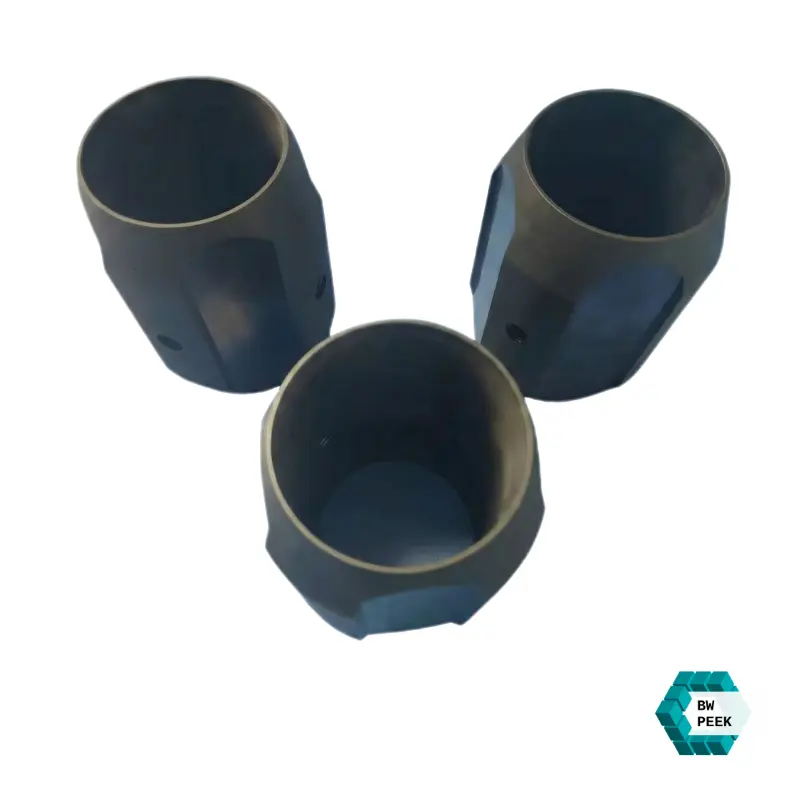
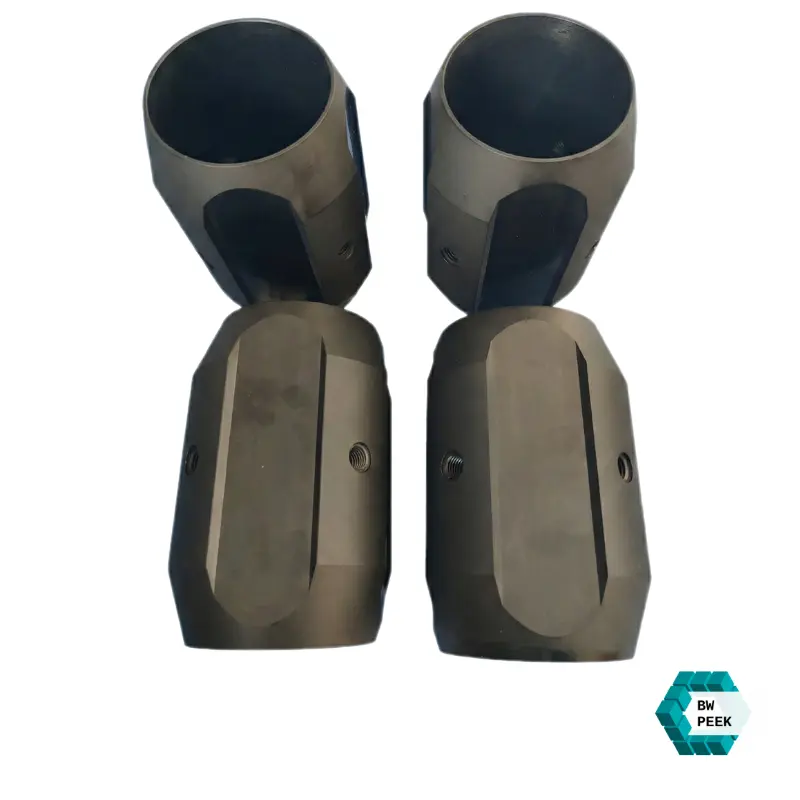
PEEK Centralizer

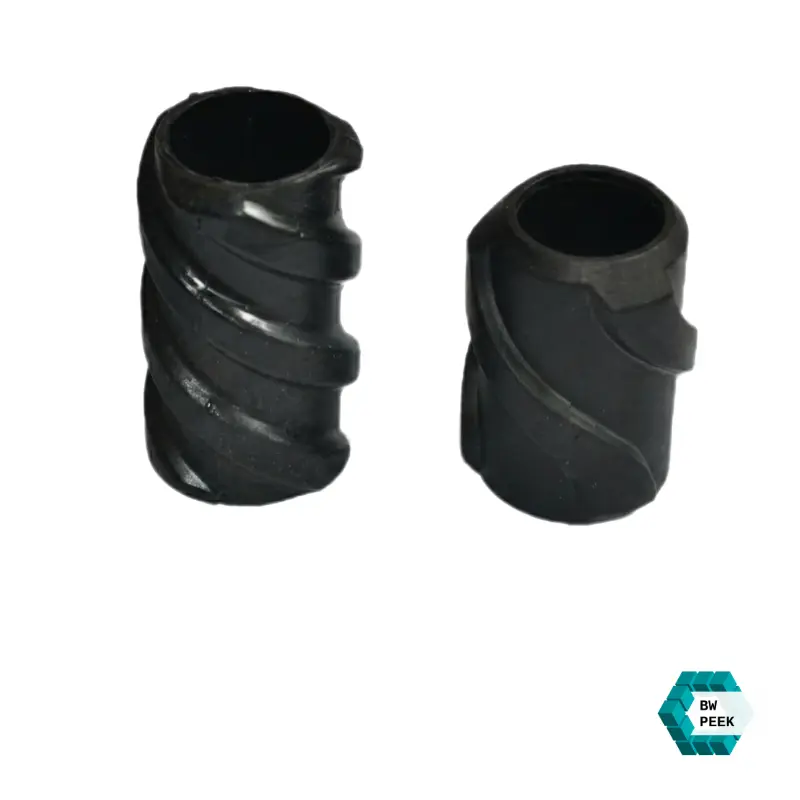
The Casing Centraliser is also an important mechanical component of oil and gas wells. Its purpose is to be able to keep tubing or casing centered in the wellbore, so that it does not press against the wall of the well.
PEEK centraliser is not just designed to absorb 210 ℃ temperatures down the hole, so that the tubing string slides as silk to the designated depth. More importantly, it ensures that in the process of deployment of 3000-metre length using a PEEK centraliser, the hook load is minimised by around 15 - 20 tonnes as compared to a steel centraliser. This saving does not just result in time savings but also reduces the potential of drilling to be stopped or even the loss of the well.

Why choose PEEK Centralizer?

  • Friction resistance:
In the run-in process 2000-metre long horizontal section: Friction coefficient in the centralisers of traditional steel: up to 0.5.
At 1500 metres, hook load loss is nearly 45 tonnes and at any given time, there is the risk of self-locking.
PEEK centraliser: The lowest possible coefficient of friction is 0.12. Hook load loss is held at less than 12 tonnes under the same conditions. This 33 tonne hook load saving equates to an adequate amount of what could be called safety margin so that should your tubing string be unexpectedly affected by a borehole collapse or rock fall, you can reach it. It is not only about deploying quicker, but is a life-saving backup in times when it counts!
  • Temperature Resistance:
The temperature has been raised to 260 °C.
At ultra-deep wells, the strength of materials falls exponentially with each 10 °C rise in bottomhole temperature. High-temperature nylon, commercially available: softens above 140 o C, not just becoming structurally unsupportive, but may also stick to the wellbore walls and result in stuck pipe.
Our compression centralisers: PEEK PEEK: PEEK has compressive strength over 100Mpa even at intensely high temperatures of 260°C.
Field experience: At Tarim Oilfield, a 8,200-metre ultra-deep well, in which core temperatures were 198 °C, we used 120 PEEK centralisers.
It took 72 hours to get to the bottom of the descent. When retrieved, the rib deformations had less than 0.2mm.
  • Corrosion Resistance:
In high-sulphur wells in the Middle East our products have shown ten years of service life. "Numerous clients have complained that steel centralisers corroded into rust debris within two years of deployment," In highly acidic environments with H2S concentrations of more than 15%:
Traditional metal centralisers:
Extremely high risk of hydrogen embrittlement with an average life expectancy of less than 1.5 years. Should they break and drop to the bottom of the well the cost of recovery is in the hundreds of thousands of US dollars.
PEEK Centralizer
We performed 720 hour simulated saturated strong acid immersion testing. <0.5% loss of mechanical strength was recorded. Our 360-degree precision moulding process not only provides protection against chemical corrosion, but also 150MPa ultra-high pressure testing (equivalent to 15,000 metre deep sea pressure). In Middle Eastern environments characterised by high salinity, extremes of heat and high acids, we ensure stable operation for over 10 years - genuinely meeting 'one unit per well, no replacement required throughout its life'.

Key Technical Design Facts of PEEK Centralizer

  • The "Golden Clearance" (ID vs. Pipe OD):
    Our PEEK centralizer ID will be 1.0mm-2.5mm more OD than the largest pipe OD.
    Why? This precision margin is critical so that the centralizer can be easily rotated or slid when installing the wells without causing the wobbling effect that causes fatigue due to vibration in the ultra-deep wells.
  • Rib Blade Angle (Spiral Design):
    All PEEK centralizers have a 20° to 30° spiral vane. This is not to be made pretty--it gives the cement slurry a "Vortex Effect" so that it is assured that results in 95%+displacement efficiency, and does away with mud pockets behind the pipe.
  • 100% Customization Capability:
    Since we are CNC 5 axis machining rather than crude injection machining, we can readjust the Rib OD in 0.1mm steps to suit your particular borehole requirements. In the event that your borehole is tight (say by swelling shale), we can shave the ribs to offer the optimum Standoff and Running Force.
Tubing/Casing Size (in) Body ID (mm) Max Rib OD (mm) Total Length (mm) Target Borehole Size (in) Typical Application
2-3/8" 61.5 95 - 105 150 - 200 4-1/8" - 4-1/2" High-temp HPHT Tubing
2-7/8" 74.5 110 - 120 180 - 220 5" - 6" Velocity Strings / Slanted Wells
3-1/2" 90.5 125 - 140 200 - 250 6" - 6-3/4" Deep Gas Well Completion
4-1/2" 116 145 - 165 250 - 300 6-3/4" - 7-7/8" Horizontal Section Liners
5-1/2" 141.5 190 - 210 250 - 350 8-1/2" - 9-1/2" ERD (Extended Reach) Casing
7" 180 205 - 240 300 - 400 8-1/2" - 12-1/4" Intermediate Casing Strings
9-5/8" 247.5 290 - 310 350 - 450 12-1/4" Major Hole Stabilization

When exposed to wellbore conditions above 195°C with high H2S content, conventional composite centralisers show 40% rib wear after deployment to 4000 metres due to the action of friction causing heat and chemical degradation.

Our solution:

  • Material upgrade: The use of 30% carbon fibre reinforced PEEK materials not only solves the temperature resistance issue, but also makes the tensile strength of the material reach more than 160MPa (compared with 40MPa for standard plastics).
  • 360-degree encapsulation design: Compared to simple injection moulding methods, the geometric tolerances of all the ribs in our compression moulding + secondary machining process are controlled within ±0.05mm.
  • Field Test Data: The horizontal section of this well totalled 2,200 metres with no obstructions being encountered throughout the entire horizontal work path. Upon retrieval inspection, the PEEK centraliser only showed minor scratches at the micrometre level and had a 98% integrity.

Installing PEEK  Centralizer (especially the high performance carbon fibre reinforced ones) is not a trivial process, and cannot be categorised as a simple "sliding" action.

Owing to the exceptionally low coefficient of friction inherent to PEEK (approximately 0.12), if incorrectly installed it may suffer a downhill slip, analogous to that of an eel, thus denying its ability to maintain centralisation.

To ensure optimum performance from this equipment with a high value, the following "Hardcore Installation Guide" is recommended:

  • Step 1: Precision Fit Inspection (Tolerance Control: +-0.05mm)

Procedure: Before the well entry the outer diameter of the casing or tubing should be measured against the inner diameter of the PEEK centraliser.

Recommendation: Since the PEEK Centralizer are created through CNC precision machining with tolerances that are set at +-0.05 mm, if there are pronounced burrs or substantial paint layers on the tubing, they must be removed before tube installation. It is important to note that even a 1mm deviation can compromise downhole stability.

  • Step 2: Determine the "Positioning Point" (using Stop Collars)

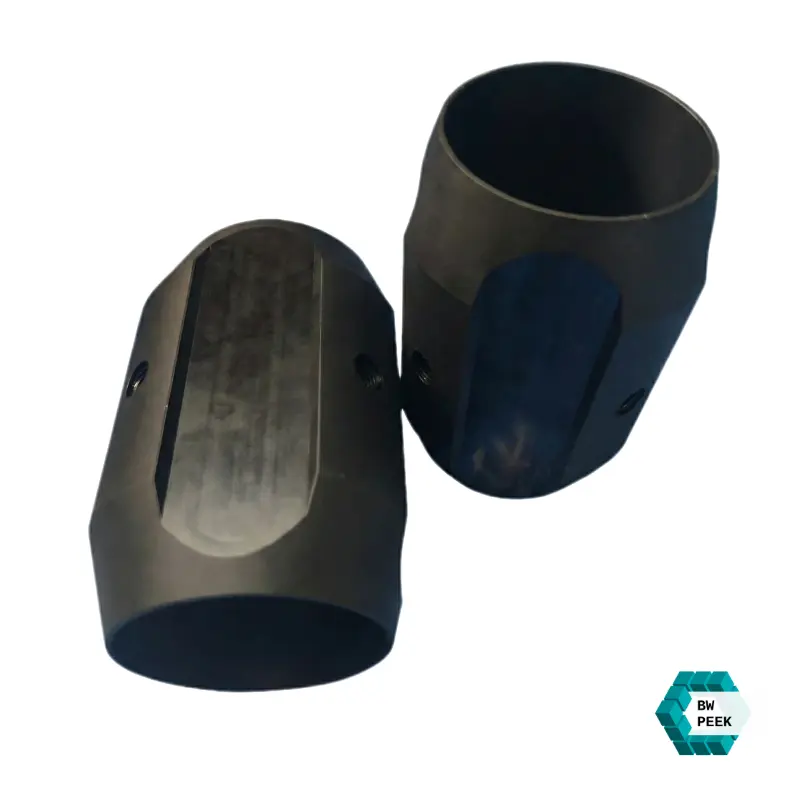
Operation :The PEEK Centralizer comprises of a sliding configuration and requires the use of stop collars.

Core Parameters:
Single Stop Collar Installation :
Mount the stop collar below the centraliser, in which it can be free to rotate at the top (suitable for rotary running in wells with large displacement).

Dual Stop Collar Installation:
Mount one above and one below in order to "lock" the centraliser within a fixed range.

  • Step 3: Torque Management (Avoiding "By Feel" Approaches)

Operation:Fit the stop collars to the tubular string using the hexagon socket bolts supplied.

Data The fastening bolts for the stop collars must be tightened using a calibrated torque wrench. The torque values are usually in the range of 80 to 120 Nm depending on the bolt specifications.

Warning: By virtue of PEEK's low-friction properties, it is possible for the centraliser to be 'freed' in the insertion process if insufficient attention is given to the tightening of the thrust rings, especially in the event of a tapered formation. Such disengagement not only does not admit of proper centralisation but is liable to cause a pipe sticking.

  • Step 4: Spacing the Deployment (Scientific Placement)

Procedures Installation should be based on the spacing schedule obtained from design software (e.g., CentraDesign).

Field Parameters: While performing horizontal sections, it is generally recommended to instal 1 unit for every one to 2 pipe strings.

Summary: Expenditure for proper installation should not be minimised for marginal weight saving. The cost of an additional PEEK Centralizer is minority to the cost of the failed run or the abandonment of the entire well.

Technical Specification & Performance Benchmark

Feature / Property Carbon Steel Centralizer Reinforced Nylon (PA66) PEEK Centralizer
Max. Operating Temp (Continuous) 300℃+ 110℃- 130℃ 260℃ (Continuous) / 315℃(Peek)
Coefficient of Friction (Wet) 0.35-0.50 0.20-0.25 0.12-0.15 (Up to 75% Reduction)
Compressive Strength >400MPa 60-80MPa 160-190 MPa(High Rigidity)
Water Absorption (24h) 0% 1.2%-1.5% (Risk of Swelling) <0.1% (Zero Dimensional Change)
H2S / CO2 Resistance Poor (High Risk of Hydrogen Embrittlement) Moderate (Polymers may degrade) Exceptional (Total Chemical Inertness)
Casing Protection High Wear (Damages 13Cr/Chrome) Non-damaging Protective (Low-wear, Self-lubricating)
Running Success Rate Baseline Risk of Melting/Deformation 100% (Proven in ERD & HPHT Wells)
Service Life (High Acid Env) <2 Years 3-5 Years 10+ Years (Ultra-Long Durability)

Tab Content

This is a basic text element.

Tab Content

This is a basic text element.

Hardcore Test Report for Technical Experts

Get Your High-Performance Composite Centralizer Now!

Related products

BWPEEK

Zhejiang bw industry

  • NO,77 yongxing road, lanxi city , zhejiang provice, china

contact BWPEEK

Email:sales@peekmaterials.com
Phone:+86-13868966491

subscribe to our newsletter

social connects

© BWPEEK 2024. All rights reserved.
privacy policy | terms and conditions