
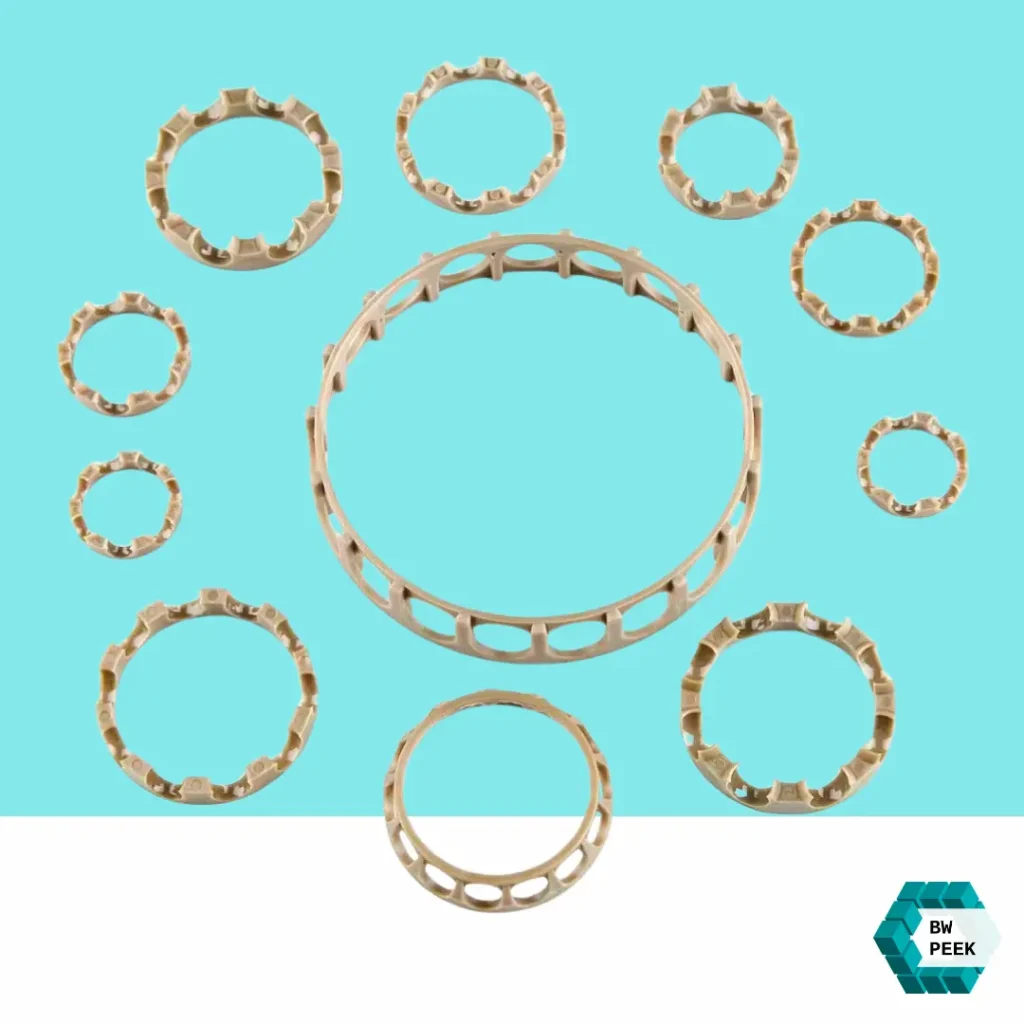
Dive into the world of PEEK bearing cages, where high-performance meets precision engineering! This article explores the crucial role of bearing cages, with a special focus on PEEK (polyetheretherketone) as an ideal material.
We’ll uncover why PEEK bearing cages are increasingly favored in industries demanding exceptional durability, chemical resistance, and performance under extreme conditions.
Join us as we delve into the types, importance, and advantages of using PEEK in bearing cage design, ensuring optimal machinery performance and longevity.
A bearing cage, also known as a retainer, is a critical component within a bearing assembly. Its primary function is to separate the rolling elements, such as balls or rollers, maintaining even spacing to reduce friction and prevent contact between them. This separation ensures smooth operation and extends the service life of the bearing.
The cage also assists in distributing the lubricant evenly, further minimizing friction and wear.
Without a cage, the rolling elements would bunch together, leading to increased friction, heat generation, and ultimately, premature bearing failure.
The cage material and design significantly impact the bearing’s performance, particularly in high-speed or high-temperature applications.
Bearing cages are manufactured in a variety of designs to meet different application needs. Several common types are available, offering distinct advantages:
The optimal cage selection hinges on considerations like speed, load, operating temperature, and the environmental conditions.
PEEK cages, in particular, excel in challenging environments due to their superior properties.
Bearing cages play a vital role in the efficient and reliable operation of machinery across various industries. By maintaining consistent spacing between rolling elements, bearing cages minimize friction and prevent premature wear, significantly extending bearing life.
This is particularly crucial in high-speed applications where excessive friction can lead to rapid failure. The cage also ensures even distribution of lubricant, further reducing friction and heat.
In industries such as aerospace and automotive, where performance and reliability are paramount, high-performance bearing cages, especially those made from PEEK material, are essential for ensuring the longevity and efficiency of critical machinery. Properly functioning bearing cages contribute to reduced downtime, lower maintenance costs, and improved overall equipment performance.
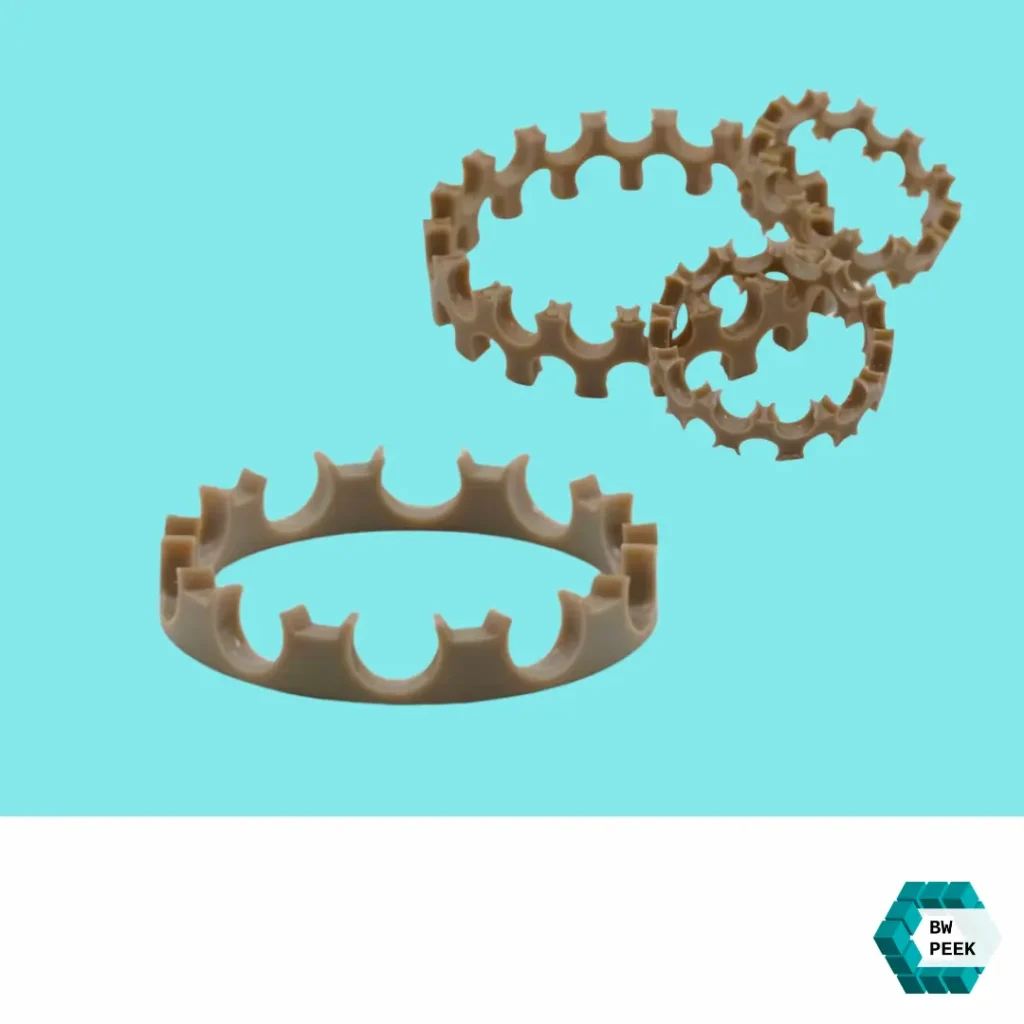
PEEK, short for polyetheretherketone, is a high-performance thermoplastic polymer prized for its exceptional properties, making it an ideal material for demanding engineering applications.
This special engineering plastic offers a unique combination of high mechanical strength, high temperature resistance, and excellent chemical resistance.
PEEK material maintains its structural integrity and mechanical properties even at elevated temperatures, making it suitable for environments where other polymers would degrade. Its inherent resistance to a wide range of chemicals, including acids, bases, and solvents, further expands its usability.
PEEK is also known for its wear resistance and low coefficient of friction, contributing to its suitability in moving parts and bearing applications, which makes it perfect for a PEEK bearing cage.
PEEK bearing cages offer a multitude of advantages over cages made from traditional materials. Notably, PEEK’s high temperature resistance ensures reliable performance in demanding thermal environments. Its low coefficient of friction translates to reduced friction and wear, extending bearing life and minimizing the need for frequent replacements.
The superior chemical resistance of PEEK safeguards the bearing from corrosion, particularly crucial in harsh chemical environments. Furthermore, PEEK’s high mechanical strength ensures the cage can withstand substantial loads and high-speed operation without deformation or failure.
This combination of properties makes PEEK bearing cages ideal for applications where reliability, durability, and longevity are paramount, further enhancing the performance of ball bearing applications. The self-lubrication qualities inherent in PEEK further contribute to reduced friction, making them a high-performance choice.
PEEK bearing cages find extensive application across diverse industries due to their exceptional performance characteristics. In the aerospace industry, PEEK cages are used in critical components requiring high reliability and resistance to extreme temperatures and chemicals.
Similarly, the automotive sector leverages PEEK cages in engine and transmission systems where high-temperature and high-speed conditions prevail. Industries dealing with corrosive substances, such as chemical processing plants, also benefit from PEEK’s superior chemical resistance.
Furthermore, PEEK’s excellent wear resistance and low coefficient of friction make it suitable for high-speed machinery and equipment where reduced friction is essential for optimal performance and prolonged bearing life.
You can also find PEEK bushings as a part of machinery. The high performance of a PEEK bearing retainer makes them the ideal material for demanding conditions.
If you’re looking for a PEEK bearing cages manufacturer, consider these varied applications that highlight the material’s versatility.
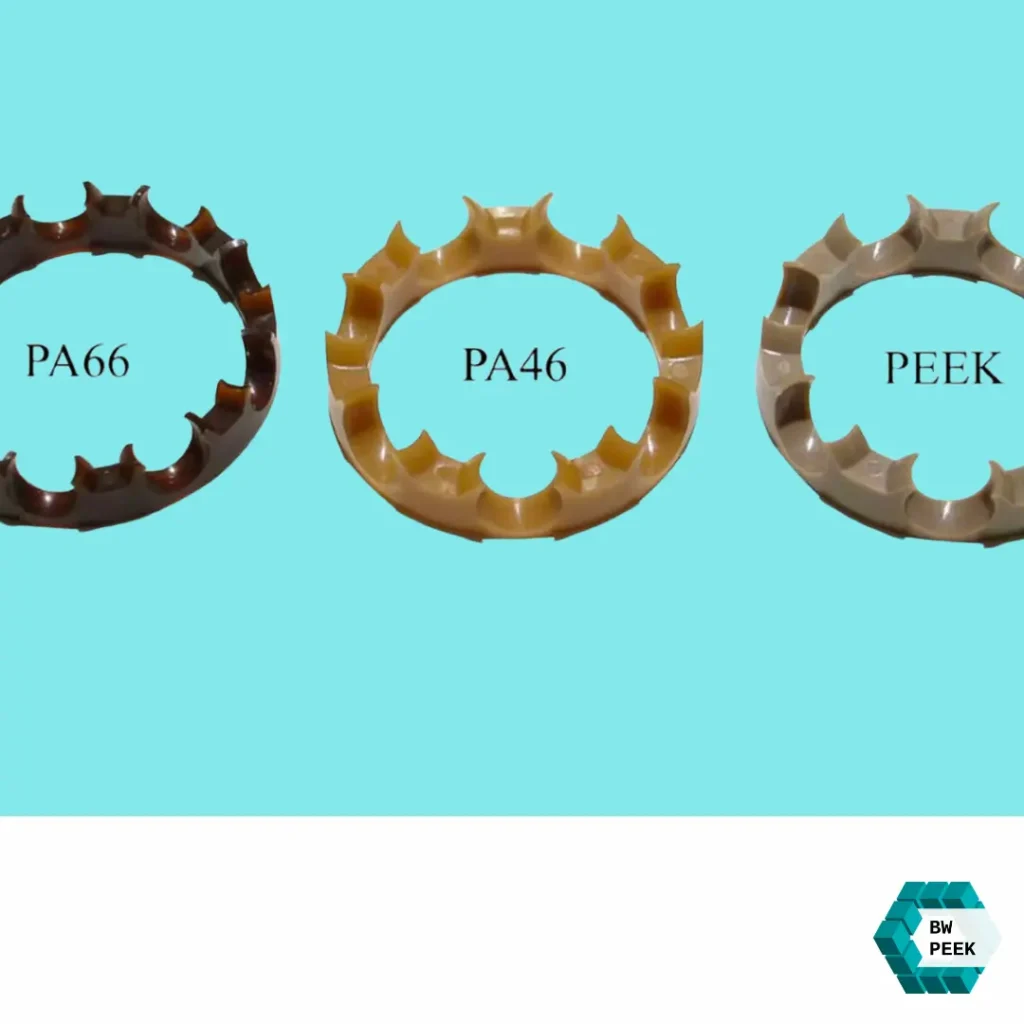
When it comes to bearing cages, there’s a whole range of materials that engineers consider. Traditional options like steel and brass are often used for their strength and cost-effectiveness. Polymers like PTFE are great for applications where low friction is key.
But in high-performance situations, PEEK material really shines. As a special engineering plastic, PEEK offers a unique combination of mechanical strength, high temperature resistance, and chemical resistance.
This makes PEEK bearing cages a top choice where reliability and durability are paramount. The selection of the cage material will ultimately define the bearing life.
PEEK bearing cages offer a distinct edge compared to alternatives. Other materials have limitations which PEEK overcomes, for instance:
PEEK, on the other hand, balances all these factors. It boasts high mechanical strength, high temperature resistance, and excellent chemical resistance, all while maintaining a relatively low coefficient of friction. This makes PEEK the ideal material in challenging environments, excelling where other materials fall short. PEEK’s self-lubrication is also a notable advantage, contributing to reduced friction and extending the bearing life.
Selecting the right material for a bearing cage involves a careful balancing act. Operating temperature range is a huge consideration; high-temperature environments demand materials like PEEK that can maintain their integrity.
The speed of the machine also plays a role, as high-speed applications require materials with low coefficient of friction and high wear resistance to reduce friction and prevent premature failure. Chemical exposure is another factor, as some environments necessitate materials with exceptional corrosion resistance.
Load requirements, cost considerations, and the desired bearing life all contribute to the decision-making process. Ultimately, the goal is to choose a material that delivers the best combination of performance, durability, and cost-effectiveness for the specific application.
For demanding applications, a PEEK bearing retainer usually is the preferred choice. When you’re looking for a PEEK bearing cages manufacturer, keep these factors in mind to ensure you get the best solution for your needs.
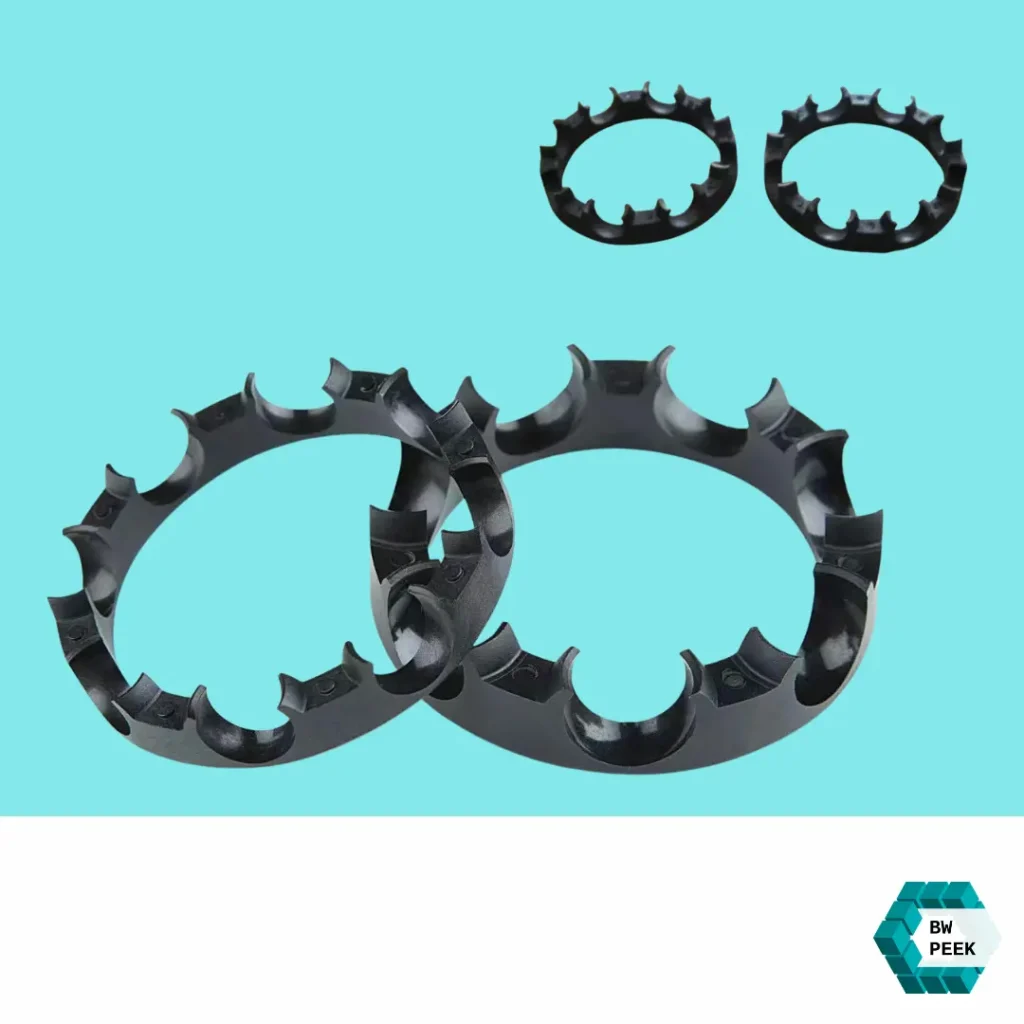
Manufacturing PEEK bearing cages involves several specialized processes to make the most of PEEK’s unique properties. Common manufacturing techniques include:
Additive manufacturing is also increasingly used for complex designs and prototypes. Each process demands precise control of temperature, pressure, and tooling. Post-machining treatments are often necessary to improve surface finish and accuracy.
When choosing a PEEK bearing cage manufacturer, ensure they are experienced with these processes.
Quality control is paramount in the production of PEEK bearing cages to ensure optimal performance and reliability. Dimensional accuracy is closely monitored using coordinate measuring machines (CMMs) to verify that cages meet specified tolerances.
Material testing confirms that the PEEK material meets standards for mechanical strength and high temperature resistance. Surface finish is inspected to minimize friction and wear. Non-destructive testing methods, such as ultrasonic inspection, can detect internal flaws or voids that could compromise cage integrity.
Statistical process control (SPC) is employed to monitor production processes and identify potential issues early on.
These rigorous quality control measures ensure that each PEEK bearing cage meets the highest standards for performance and longevity.
Selecting a reliable PEEK bearing cages manufacturer is crucial for ensuring the quality and performance of your bearings. Look for a manufacturer with a proven track record of producing high-quality PEEK components and years of experience working with this special engineering plastic.
Check for certifications, such as ISO 9001, demonstrating a commitment to quality management. Assess their manufacturing capabilities, including machining, injection molding, and additive manufacturing. Inquire about their quality control processes and the testing methods they employ.
Request references from other customers to gauge their reputation and reliability. A reputable manufacturer will also offer design assistance and material selection guidance.
Choosing the right PEEK bearing cages manufacturer is critical to obtaining high-performance cages that meet your specific needs.
PEEK’s exceptional high temperature resistance makes it an ideal material for bearing cages in demanding thermal environments.
Unlike many other polymers, PEEK maintains its mechanical strength and dimensional stability at elevated temperatures, ensuring reliable performance. It can withstand continuous operating temperatures up to 250°C (482°F) and can handle short-term exposure to even higher temperatures.
This makes PEEK bearing cages suitable for applications in aerospace engines, automotive transmissions, and industrial machinery where heat generation is significant.
The high temperature performance of PEEK minimizes wear and extends bearing life, reducing the need for frequent replacements. The high-temperature resistance is a key factor in its selection.
In high-speed bearing applications, PEEK bearing cages offer significant advantages. The low coefficient of friction of PEEK minimizes heat generation and wear, allowing bearings to operate at higher speeds without premature failure. Its high mechanical strength ensures that the cage can withstand centrifugal forces and vibrations without deformation.
The lightweight nature of PEEK reduces inertia, further improving high-speed performance. PEEK cages also provide excellent lubrication properties, reducing friction and wear.
The wear resistance of PEEK contributes to extended bearing life and reduced maintenance costs. Its exceptional performance in demanding high-speed applications makes PEEK the ideal material.
Numerous case studies demonstrate the effectiveness of PEEK cages in real-world applications.
In aerospace, PEEK bearing retainers are used in jet engine bearings, where their high temperature resistance and mechanical strength ensure reliable performance under extreme conditions.
Automotive manufacturers utilize PEEK cages in transmission systems to reduce friction and extend component life.
Chemical processing plants employ PEEK cages in pumps and mixers, taking advantage of the material’s superior chemical resistance. High-speed machine tools benefit from the low coefficient of friction and wear resistance of PEEK cages.
These case studies highlight the versatility and effectiveness of PEEK in a wide range of demanding applications, showcasing why PEEK is a high performance option.
Partner with China’s Leading PEEK Plastic Supplier
Leverage our years of experience in CNC machining and injection molding for your next project.
Get a high-performance PEEK bearing cage quote today!

 English English
  German
 Russian
 Spanish
 French
 Japanese
 Portuguese (Portugal)
 Turkish
 Portuguese (Brazil)